Zotero vs Mendeley vs EndNote: which reference manager in 2026?

If you’re starting a PhD, someone has probably told you to “get a reference manager” and left it at that. Your lab runs EndNote because somebody bought a license in 2014, half your cohort swears by Zotero, and Mendeley came preinstalled in somebody’s workflow and never left.
I should say up front that I build a reference manager myself, Milton, so read this with that in mind. I’ve tried to be fair to all three, and I’ve put Milton at the very end, where it’s easy to skip.
If you only read one section
Most people should start with Zotero. It’s free and open source, and every citation tool on earth supports it.
EndNote makes sense if your university is paying for it and your field runs on Word. It helps a lot if someone in your department already knows its quirks.
Mendeley is the pick when you need more free storage than Zotero gives you and you’re comfortable with Elsevier owning the tool, though its users have had a bumpy few years.
The numbers
| Zotero | Mendeley | EndNote | |
|---|---|---|---|
| Price | Free | Free (paid plans being replaced) | $275 one-time, $150 for students |
| Free cloud storage | 300 MB | 2 GB | Unlimited with the license |
| Open source | Yes | No | No |
| Platforms | Mac, Windows, Linux, iOS, Android | Mac, Windows, Linux, web | Mac, Windows, iPad, web |
| Word plugin | Yes | Yes (Mendeley Cite) | Yes |
| Google Docs | Yes | No | Yes |
| Group libraries | Unlimited, free | 5 groups, 25 people each, 100 MB shared | Sharing included |
| Built-in AI | None | Reading Assistant (one document at a time) | Key Takeaways, Research Assistant |
| Owner | Non-profit (Corporation for Digital Scholarship) | Elsevier | Clarivate |
I took the prices and quotas from each vendor’s site in November 2026.
Zotero
Zotero is the default answer, and for once the default is earned. It’s free, it runs everywhere, and its browser connector saves a paper with its metadata in one click from almost any journal site. The plugins for Word, LibreOffice and Google Docs work, and group libraries are free and unlimited, which you’ll appreciate the day your lab decides to share a bibliography.
Storage is the catch. You get 300 MB of free sync, a few hundred PDFs will fill it, and after that you’re paying $20 a year for 2 GB or $120 for unlimited. Plenty of people get around this with a WebDAV server or a synced folder, which works until it doesn’t.
What bothers me more is what happens once the paper is saved. Zotero’s PDF reader is decent and you can annotate in it, but each note hangs off a single item, so finding that paragraph about sample sizes across forty papers means remembering which paper it was in. There’s no built-in AI either; a whole family of AI plugins for Zotero has grown up to fill that gap, and most of them want your own OpenAI key.
Mendeley
Mendeley used to be the friendly one, with more free storage, a clean reader and a social layer for researchers. Elsevier pulled the mobile apps in March 2021, then stopped developing Mendeley Desktop, ended new downloads on September 1, 2022, and moved everyone over to Mendeley Reference Manager.
The free plan is still generous on storage at 2 GB. Groups are where it pinches: you get five, with 25 collaborators each and 100 MB of shared space, and a busy lab will run into that. You can’t buy the paid Premium plans anymore, and since November 2, 2026, Mendeley’s AI features come with a paid plan for LeapSpace, Elsevier’s AI workspace.
If you’ve got years of annotations in Mendeley, it still works and nothing forces you out. If you’re choosing today, I’d think hard about where it’s heading.
EndNote
EndNote is what institutions buy. EndNote 2025 costs $275 for a full license or $150 for students, for one user on up to three computers, and there’s a decent chance your university covers it already. Cite While You Write, its Word plugin, is mature and handles thousands of journal styles, which is why EndNote hangs on in medicine and in departments with long-lived Word templates.
2025 was also the first version with AI. Key Takeaways summarizes a paper and Research Assistant answers questions about a document, both sitting inside an interface that still feels like a database application, because that’s what it is.
If nobody’s paying for it, I find it hard to recommend over the free tools in 2026.
Switching later
Every tool here imports and exports RIS and BibTeX, so you’re never really locked in: Zotero imports a Mendeley library directly, and EndNote exports to RIS. What doesn’t always survive the trip is your PDFs and annotations, so open a few papers and check them by hand after any move.
Why I ended up building a fourth
All three are good at storing references and inserting citations. My trouble was always the reading in between. Forty papers in, I couldn’t find my own notes, and I had no way to ask “which of these used a control group?” short of opening every PDF again, which is the part most reference managers skip because they treat the job as filing rather than reading.
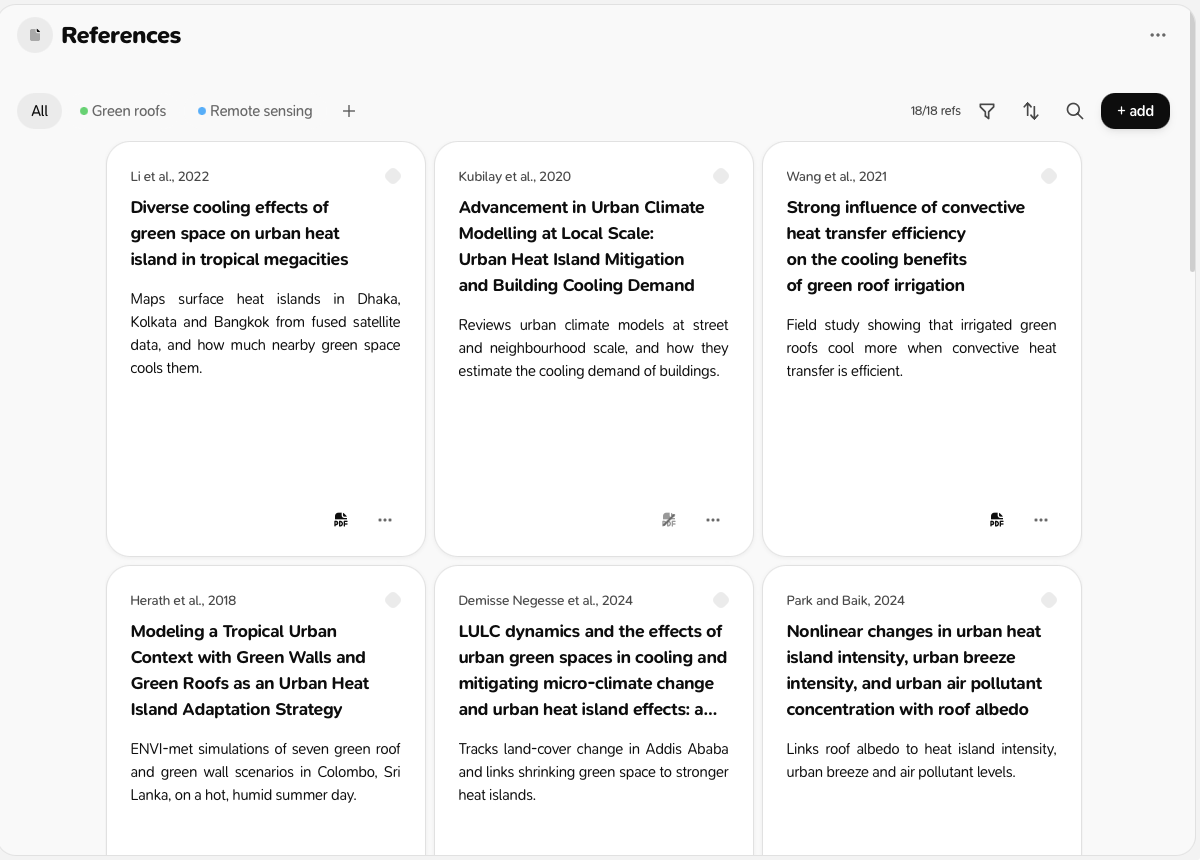
So I built Milton for that part. It’s a full reference manager for Mac, Windows and Linux. It imports your Zotero library in one click, PDFs and highlights included, and reads BibTeX and RIS files from Mendeley, EndNote or anything else; on the way out, your bibliography exports in any CSL citation style or as BibTeX. In between, you take structured notes next to the PDF, organize them in projects and collections, and search across all of them at once.
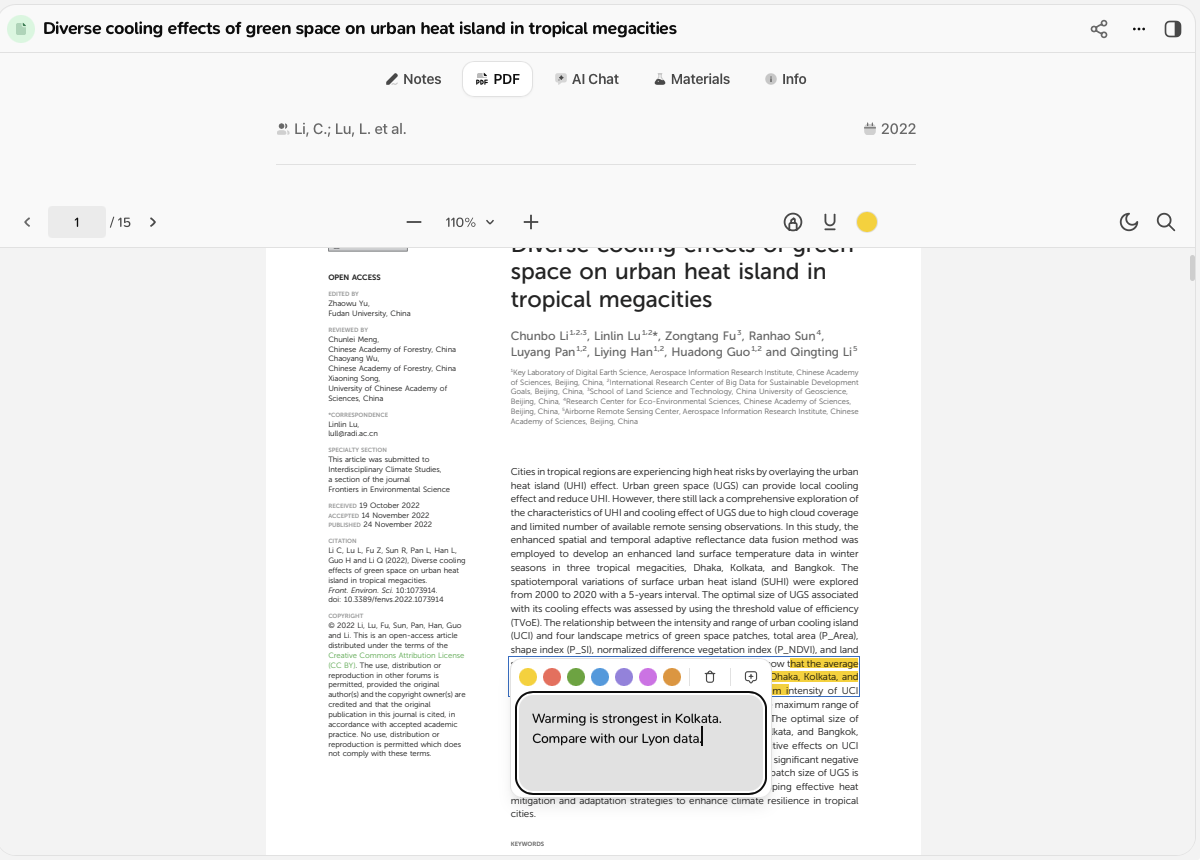
The paid plan is where you can ask questions of your library and get answers that cite the exact passages. It also reads scanned PDFs, syncs between devices and lets you write with co-authors in real time.
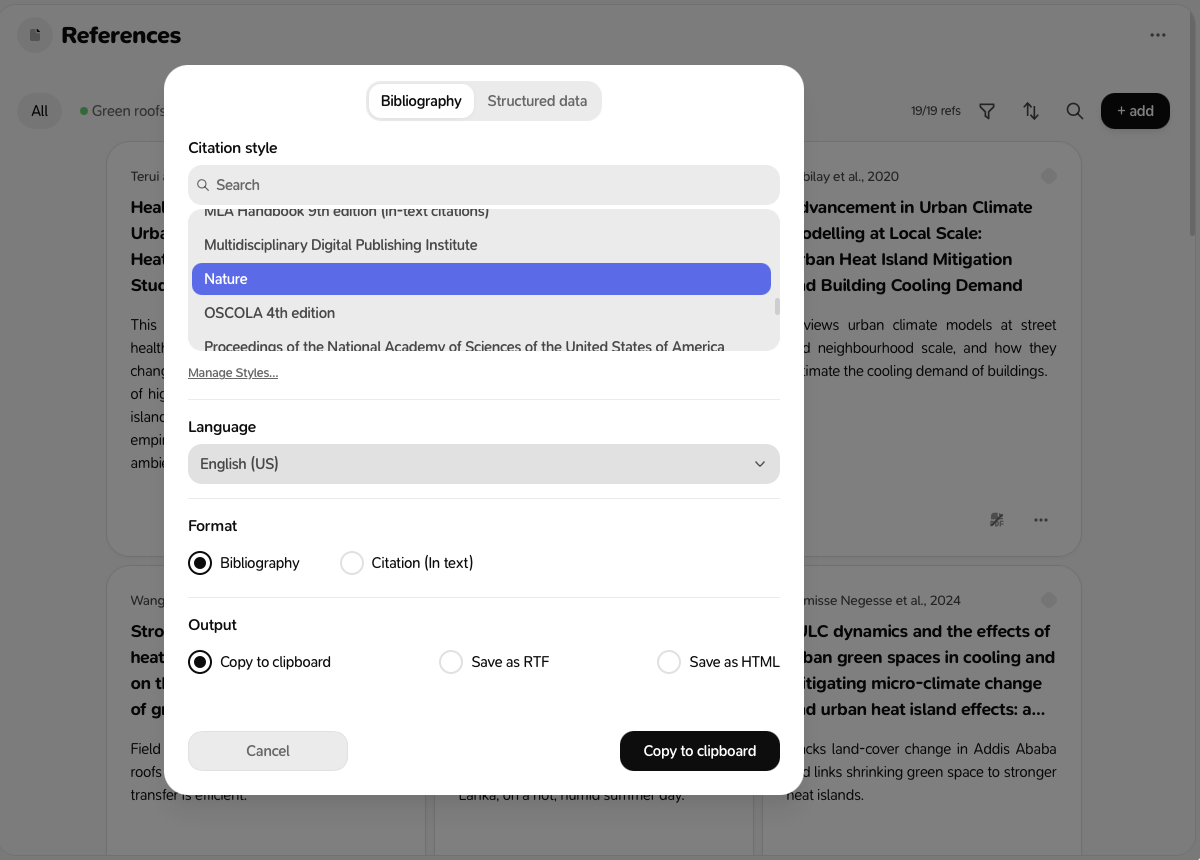
The free plan has no limit on references or PDF storage, because everything stays on your computer. There’s no Word plugin yet, which is a real gap if your field lives in Word; if you write in LaTeX, Milton compiles the manuscript and its bibliography itself.
Questions people ask
Is Zotero better than Mendeley? For most people starting now, yes, since it’s free, open source and not changing owners. Mendeley does give you more free storage.
Is Mendeley still free? The reference manager is, with 2 GB of storage. Its AI features need a LeapSpace subscription.
Is EndNote free? No. EndNote 2025 is $275, or $150 for students, so ask your library whether it provides a license before you buy one.
Can I move from Mendeley to Zotero? Yes, Zotero has a Mendeley importer. You can also export RIS or BibTeX from Mendeley and bring it into anything else, Milton included.
Can I use two of them at once? You can, but citations inserted with one plugin mean nothing to the other, so stick to one per manuscript.